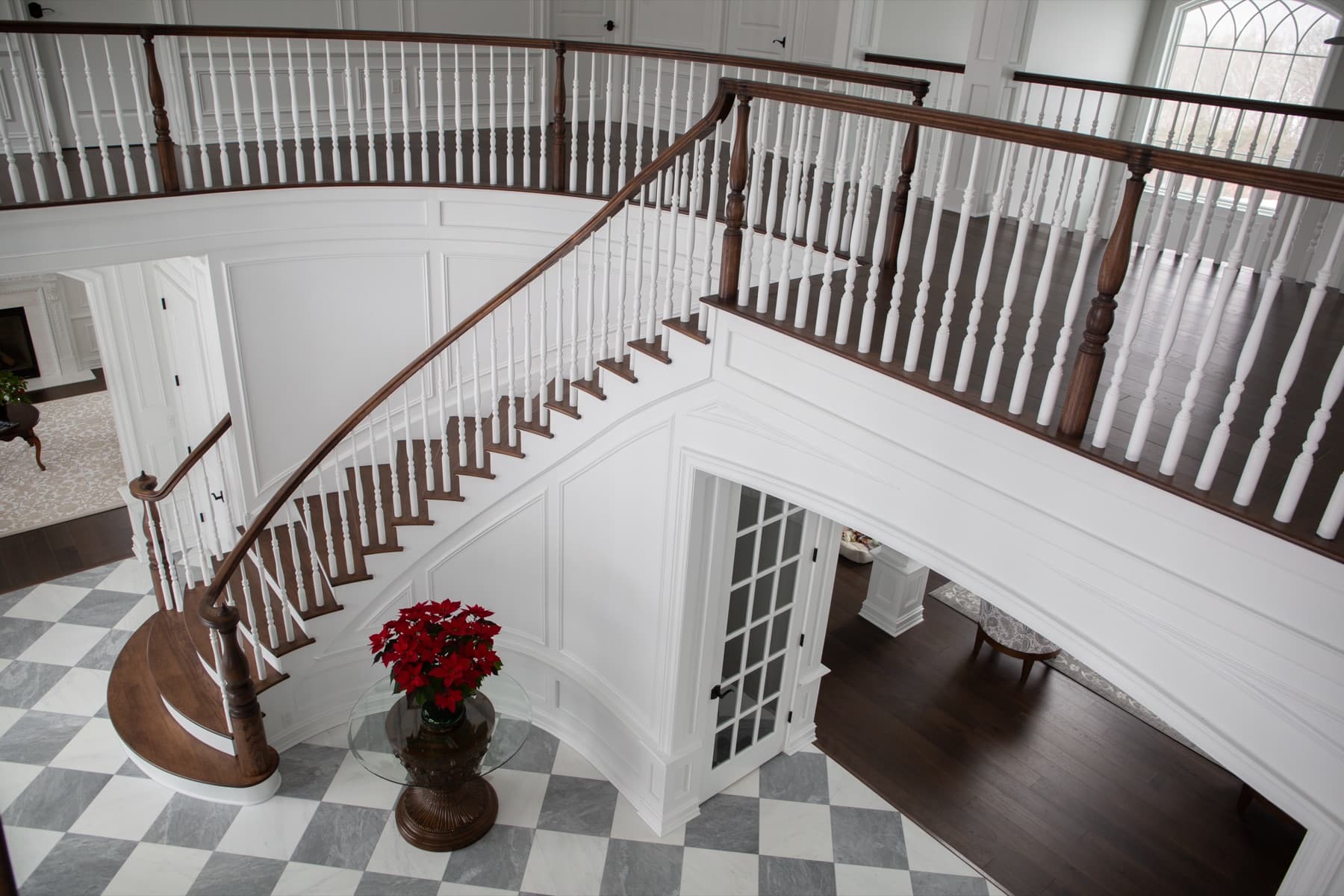
Geometric
The Hammered Face Iron Baluster Pattern
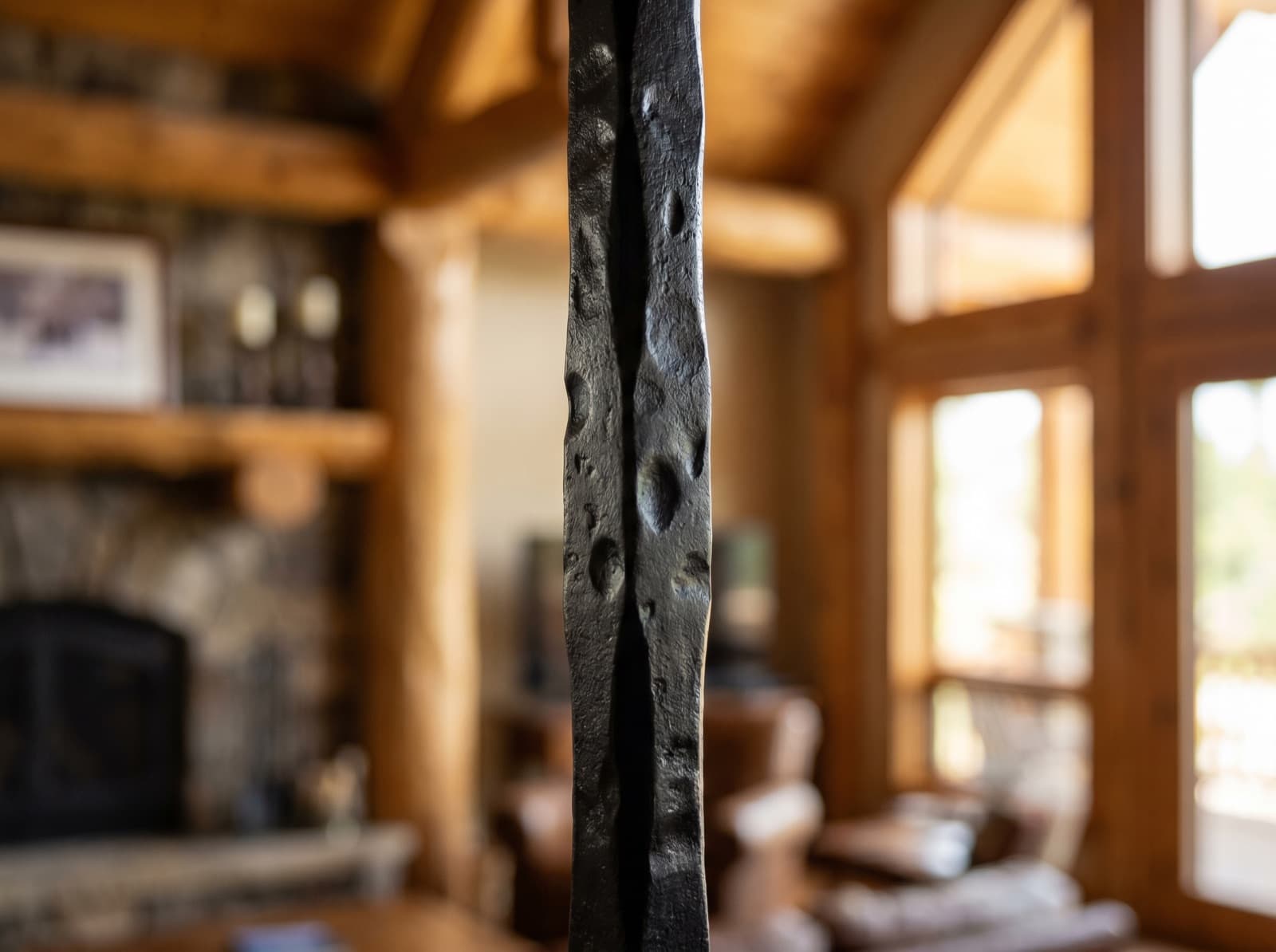
Hammered Face is square stock with a hammered texture on the visible faces — same square geometry as Hammond Edge but with surface character that reads handmade. Most-requested for mountain-style and lodge interiors and for craftsman-revival projects where the iron should feel hand-worked.
- Est. 198739 yrs
- Family-Owned
- Veteran-Owned
- 4.8★ Verified
- Lehigh Valley
Definition
What is a Hammered Face iron baluster?
A Hammered Face iron baluster is a square-stock steel picket with a hammered texture on its visible faces — the same geometry as Hammond Edge but warmer and more hand-worked in character. Sourced pre-finished in satin black or oil-rubbed bronze, it suits mountain-style, lodge, and craftsman-revival interiors.
Built & reviewed by Snyder Stairs · Whitehall, PA · Est. 1987 · Updated June 2026
Visual character
What makes the Hammered Face pattern distinct.
- Square stock with a hammered face texture
- Geometric vocabulary but warmer than Hammond Edge
- Satin-black finish standard (also available oil-rubbed bronze)
- Pairs with Mission or Utah wood profiles
When it works
Best fit for the Hammered Face pattern.
- Mountain-style and lodge interiors
- Craftsman-revival renovation projects
- Homes with exposed wood beams and stone accents
- Buyer profile: hand-worked aesthetic, $$ to $$$ price band
Pairings that work
Configurations + wood series that pair with Hammered Face.
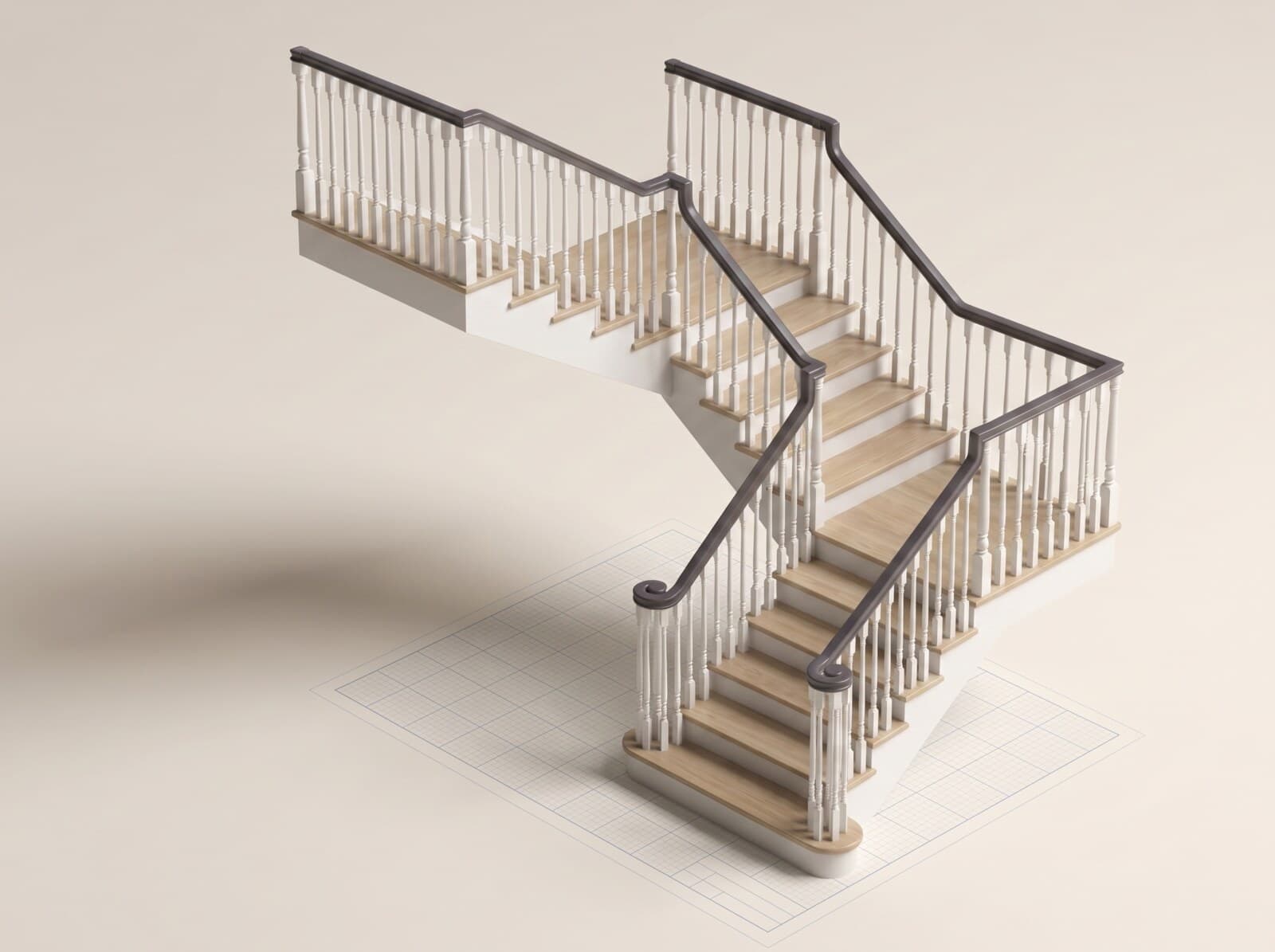
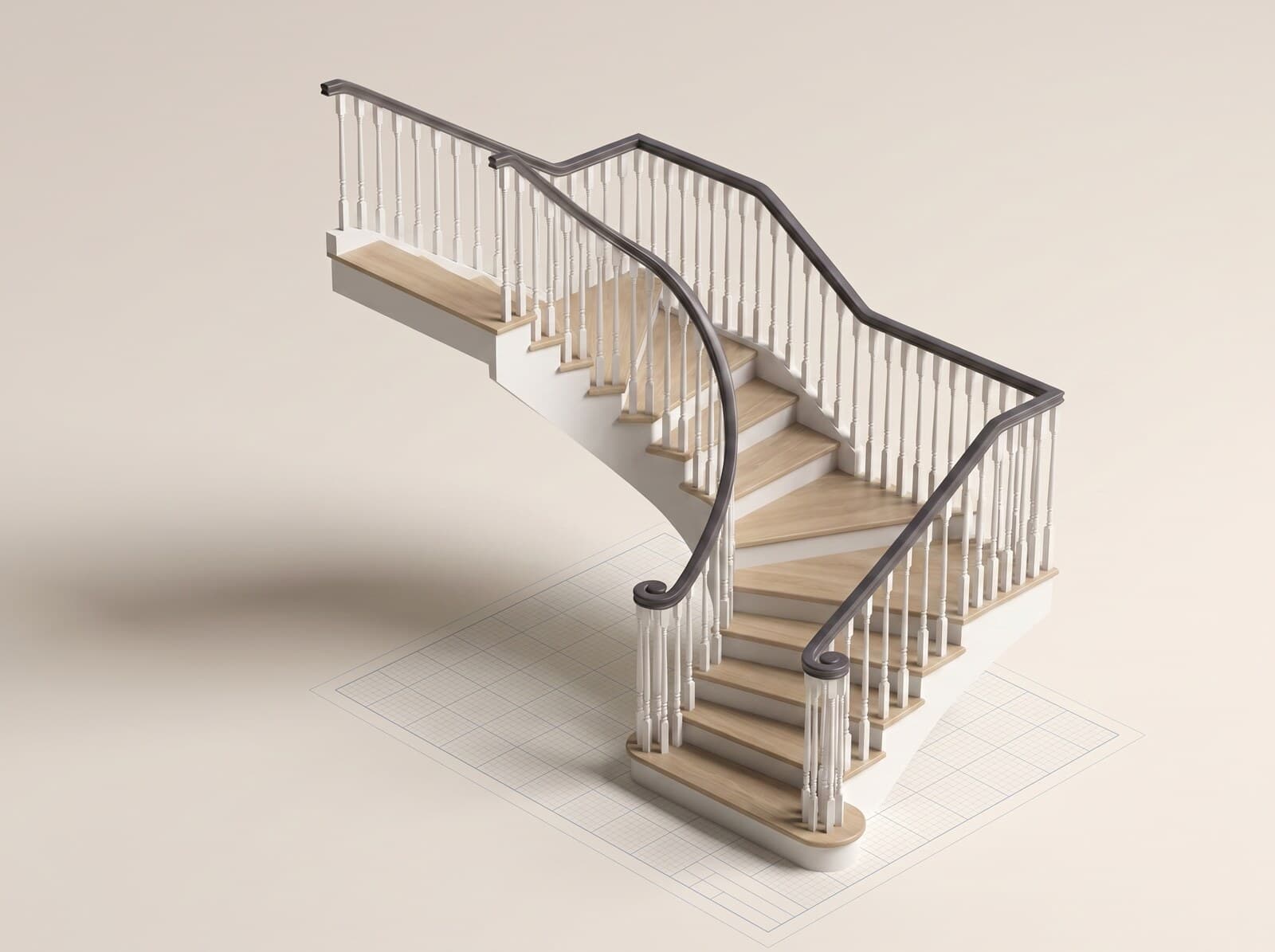
The Hammered Face pattern works best with certain stair shapes and wood series. Here are the ones we'd point you to first.
Recommended configurations
Recommended wood series

Mission
Square stock, no turning, exposed joinery. Craftsman-aesthetic and arts-and-crafts homes.
See wood series →
Utah
Western-traditional with broader newel and a chunkier square cap. Common in mountain-style and lodge interiors.
See wood series →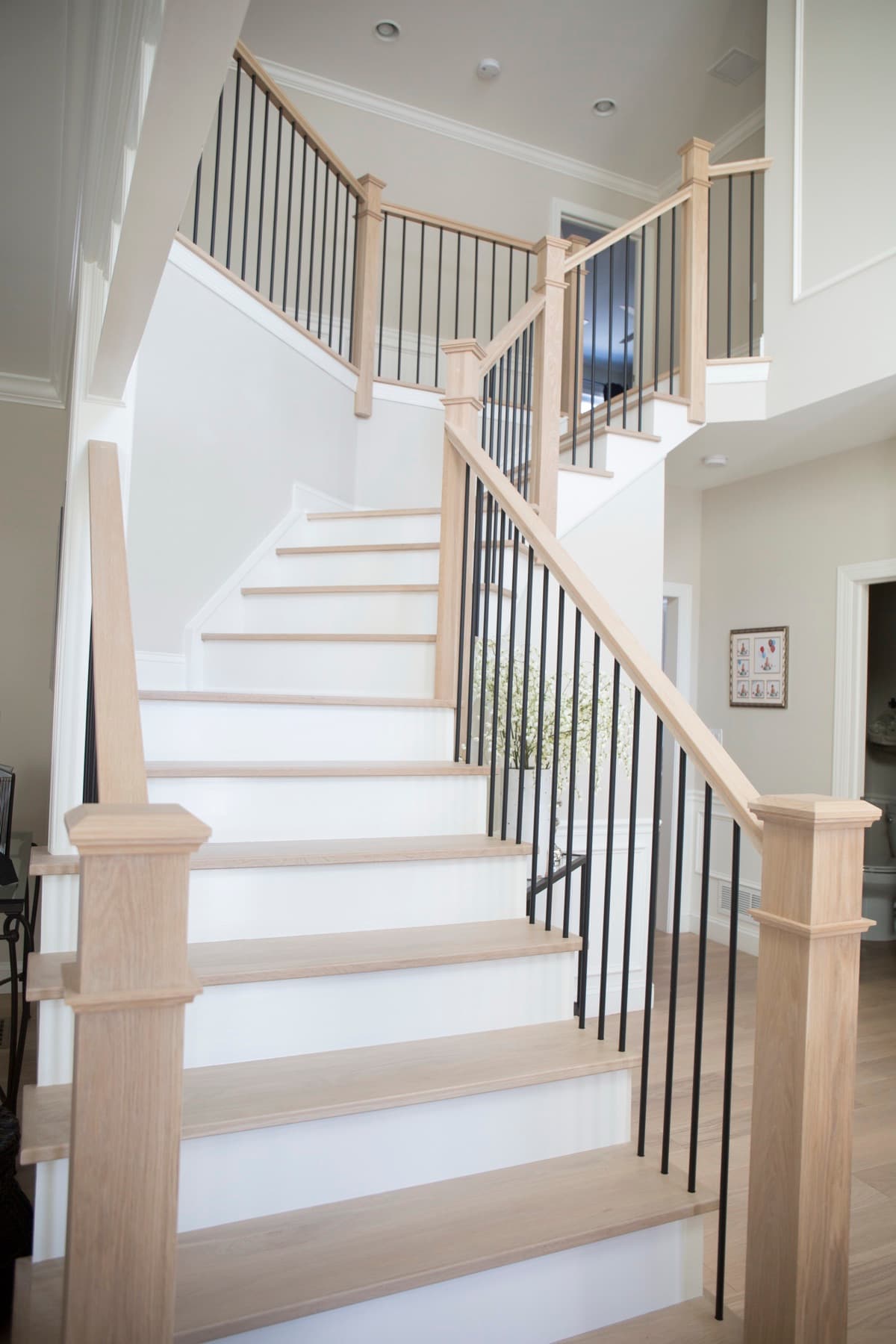
Farmhouse
Square-shouldered newels, simple turned balusters, painted-and-stained pairings. The Lehigh Valley restoration default.
See wood series →
How it compares
Should you swap to Hammered Face iron or keep wood spindles?
A wood-to-iron baluster swap is the most common single upgrade we do. Here is how Hammered Face iron pickets compare with the turned wood spindles they replace.
Hammered Face iron pickets
- Satin-black finish — no re-staining, low maintenance
- Slim profile opens the visual line of the run
- Swaps onto existing treads + handrail in a day
- Modernizes a dated wood-spindle stair fast
Turned wood spindles
- Holds a traditional or period vocabulary
- Profile + species can match existing trim
- Warmer visual mass than slim iron
- Re-stain or repaint to refresh over time
Hammered Face FAQs
Common questions about the Hammered Face iron baluster pattern.
Q: Is the hammered texture visible from a normal viewing distance?
Yes. The hammered texture is visible from 6–10 feet, which is a normal foyer viewing distance, so Hammered Face reads as textured where Hammond Edge reads as smooth. Pick the one that fits your home.
Browse every profile we carry.
Two full product catalogs — wood and iron. Flip through the whole line, mark what you like, and bring it to your first call.
Ready when you are
Custom stairs and railings, built in Whitehall.
Custom stairs and railings, built by a family of Pennsylvania craftsmen for nearly forty years. We'll give you a realistic budget on the first call — not a teaser, not a pressure-close. Get in touch, or send a few photos.
Budget on the first call · (610) 443-2240 · Whitehall, PA