Capability
Read the original
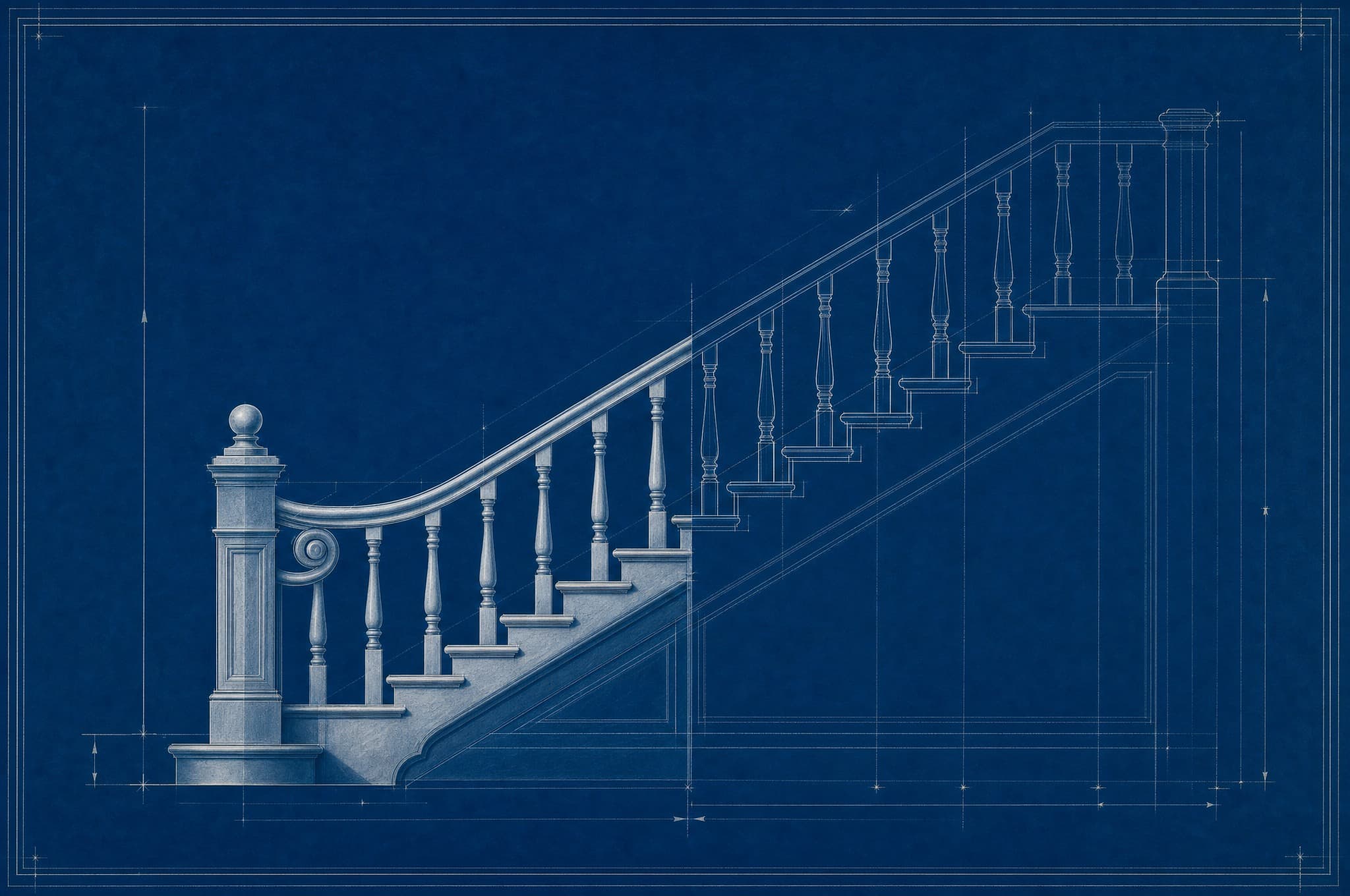
We can identify the species and lift an exact profile off a surviving newel, baluster, finial, or rail — the read most suppliers skip, and the reason the match comes back exact, not close-enough.
 SNYDERSTAIRSLehigh Valley + Northern NJ · Whitehall HQ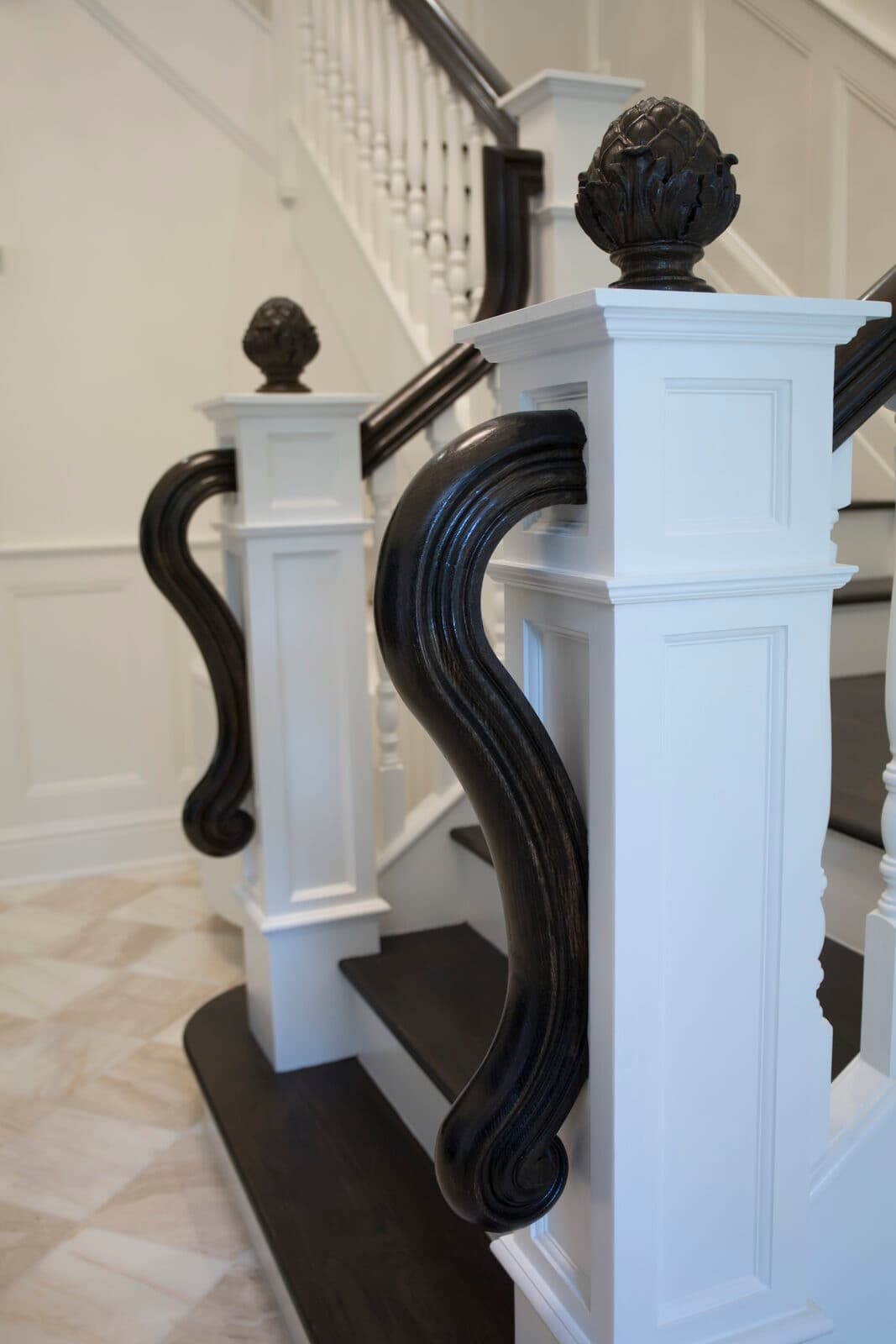
Historic homes deserve more than off-the-shelf parts. We specialize in sourcing and matching period stair components so your restoration looks true to the home's original character. Can't find a matching part? We can help.
Usually, yes. We match existing newels, balusters, and handrail profiles — turned and carved parts sourced through our specialist suppliers, fitted and finish-fit in our Whitehall shop — so restored sections read as original. Send photos of the damage and we'll tell you honestly what's matchable.
Reviewed July 2026 · Nick & the Snyder Stairs team, Whitehall PA
Why we can match it
A box store sells stock profiles; a general contractor orders close-enough. Matching a period part takes a stair shop that reads the original, coordinates the sourcing, and finishes the piece by hand — all under one roof.
We can identify the species and lift an exact profile off a surviving newel, baluster, finial, or rail — the read most suppliers skip, and the reason the match comes back exact, not close-enough.
We carry the supplier relationships to track down matching period parts where they still exist — or have them turned and carved to match by our specialist suppliers, all coordinated under one roof.
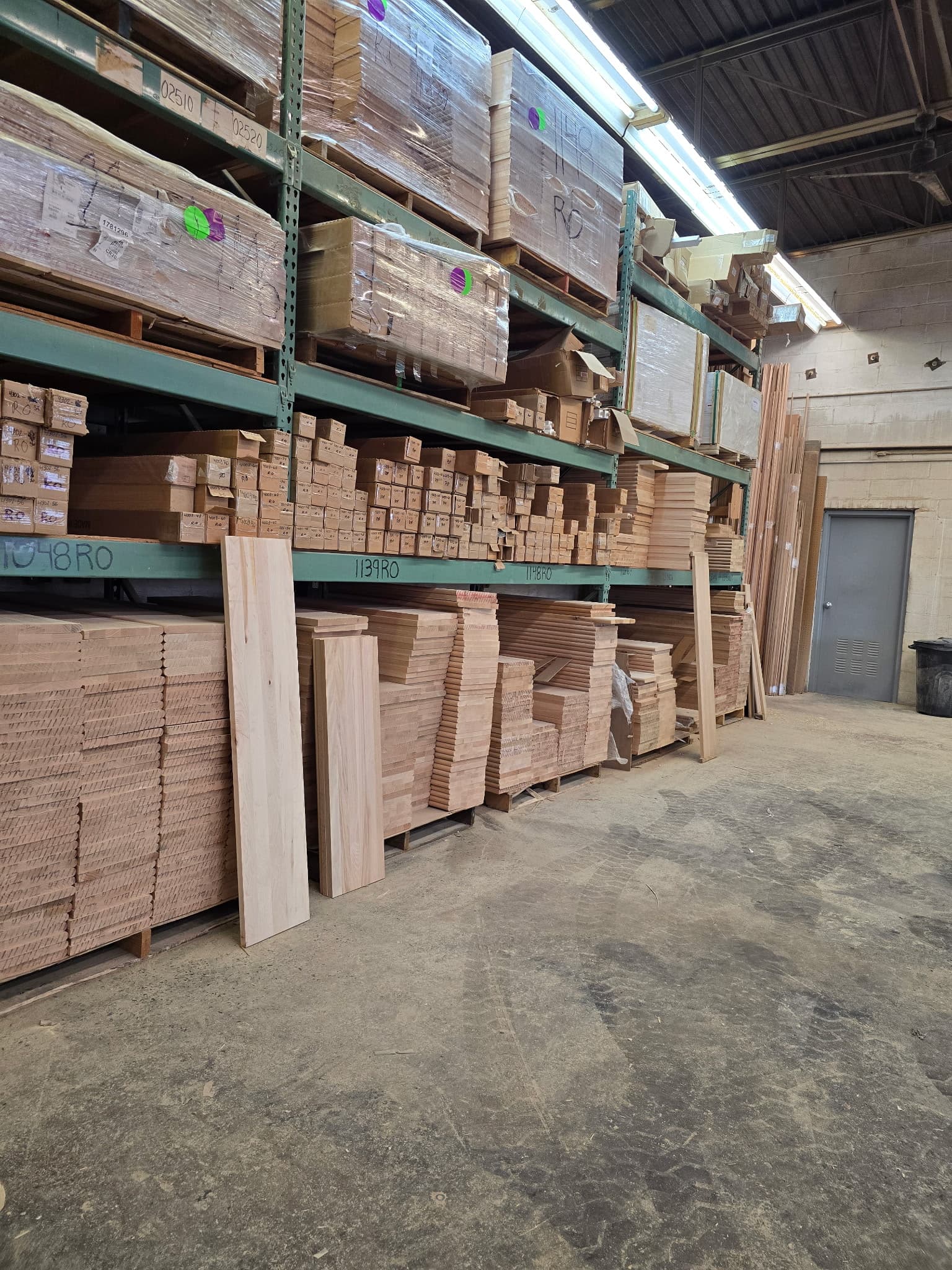
We have a full Whitehall shop to fit, finish, and detail every part before it goes in — so the new piece sits like it always belonged in the run, not like a replacement.
How a restoration runs
Most restoration projects come in via a contractor or a homeowner with a historic home. The four-step process is the same.
 01
01We measure the surviving piece, document the wood species, and photograph the run in context so the match is exact.
Your site 02
02We confirm proportions and profile with you — and, on complex or curved work, draw it up in CAD (not engineer-stamped) before anything is made.
Snyder shop · Whitehall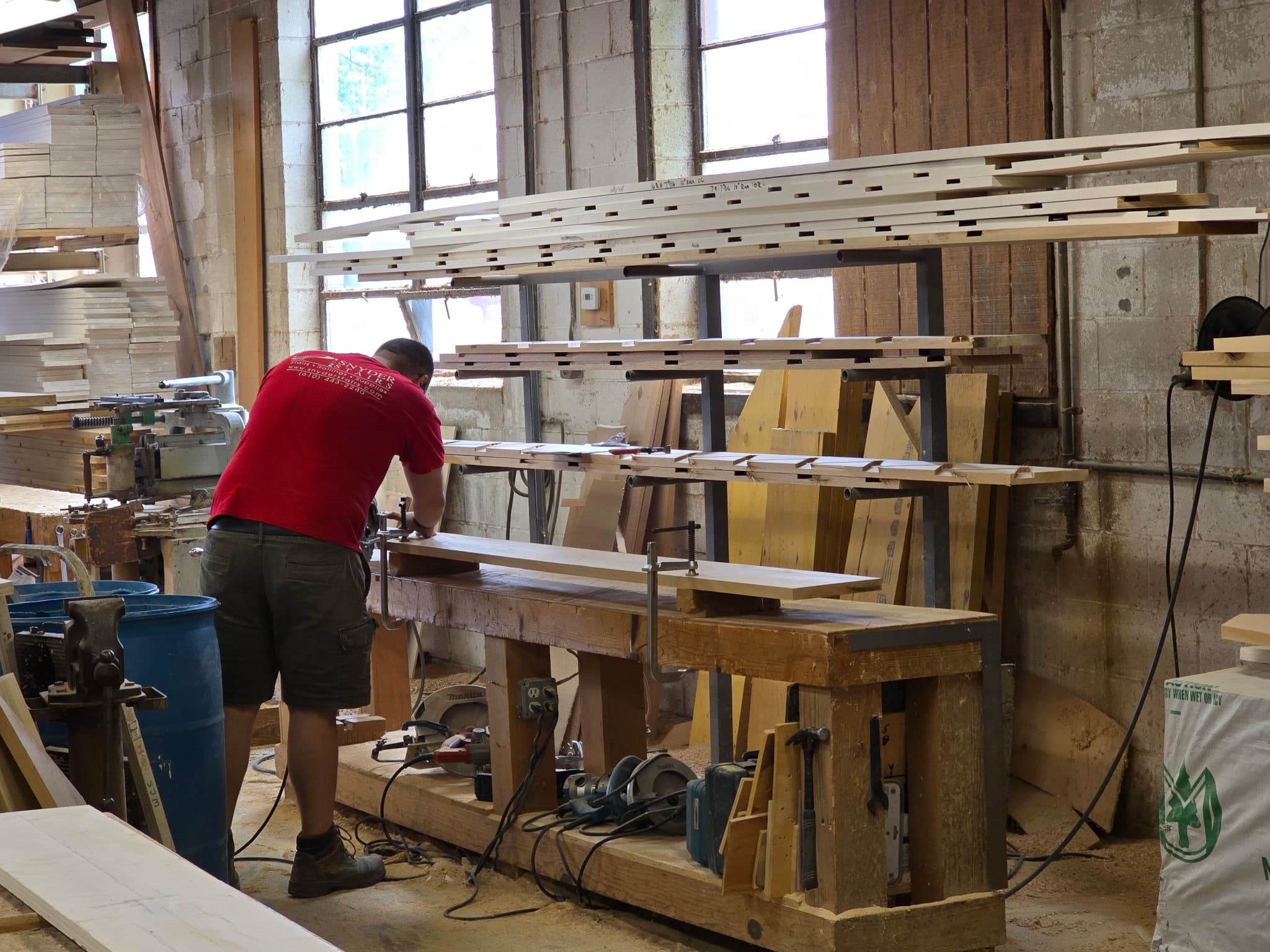 03
03We source matching period parts or have them made to match, then fit and finish them in our Whitehall shop. 6–10 weeks depending on complexity.
Snyder shop · Whitehall04On-site install of the finished parts. Finishing happens at the Whitehall shop before delivery, not on your floors. We document the work for your records.
Your homeA real project
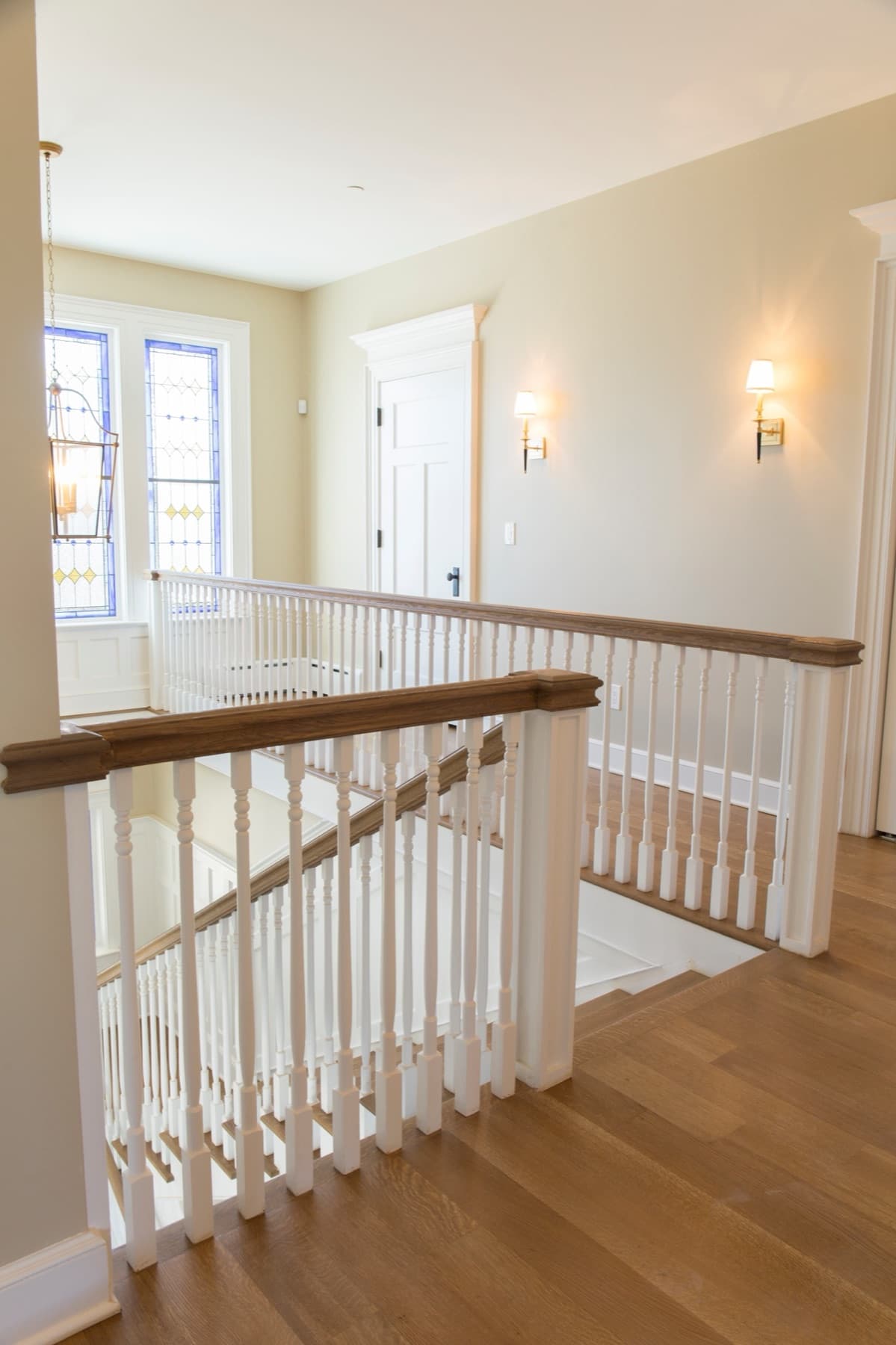
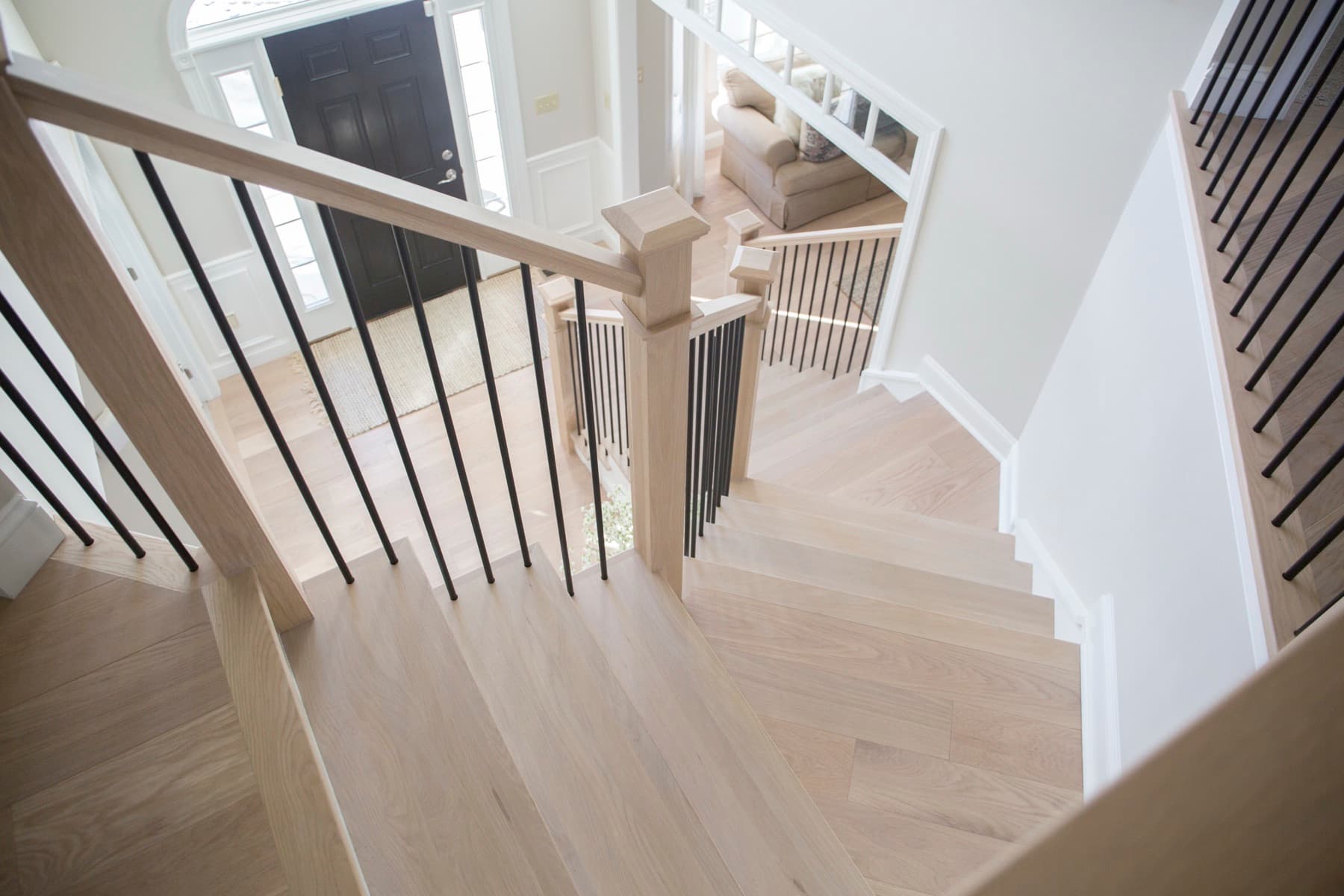
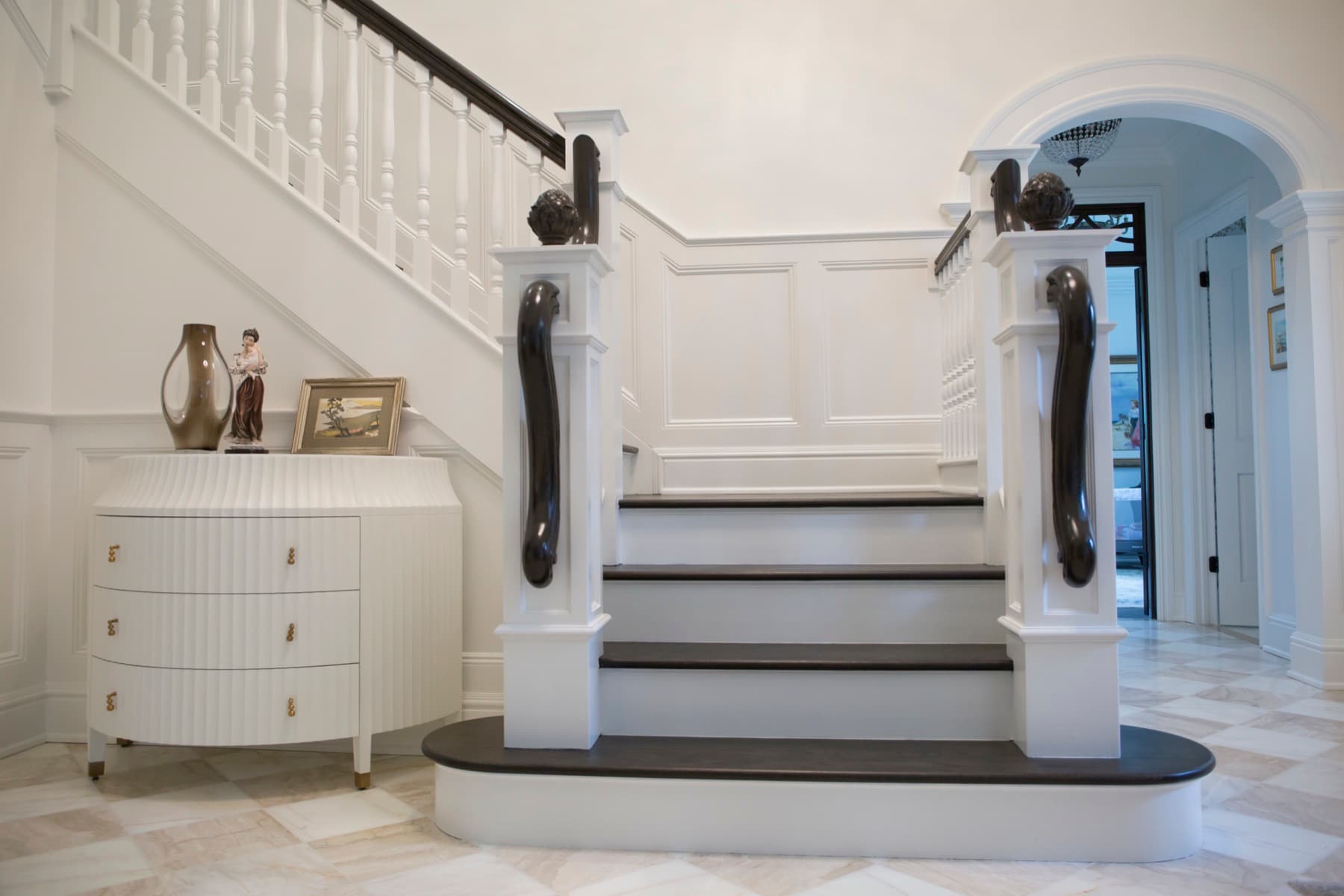
This homeowner wanted to preserve the original character of their home while replacing damaged newel posts. We sourced matching replacements and carefully installed them so the finished staircase looks true to the home's original design.
Drag the slider to see the transformation.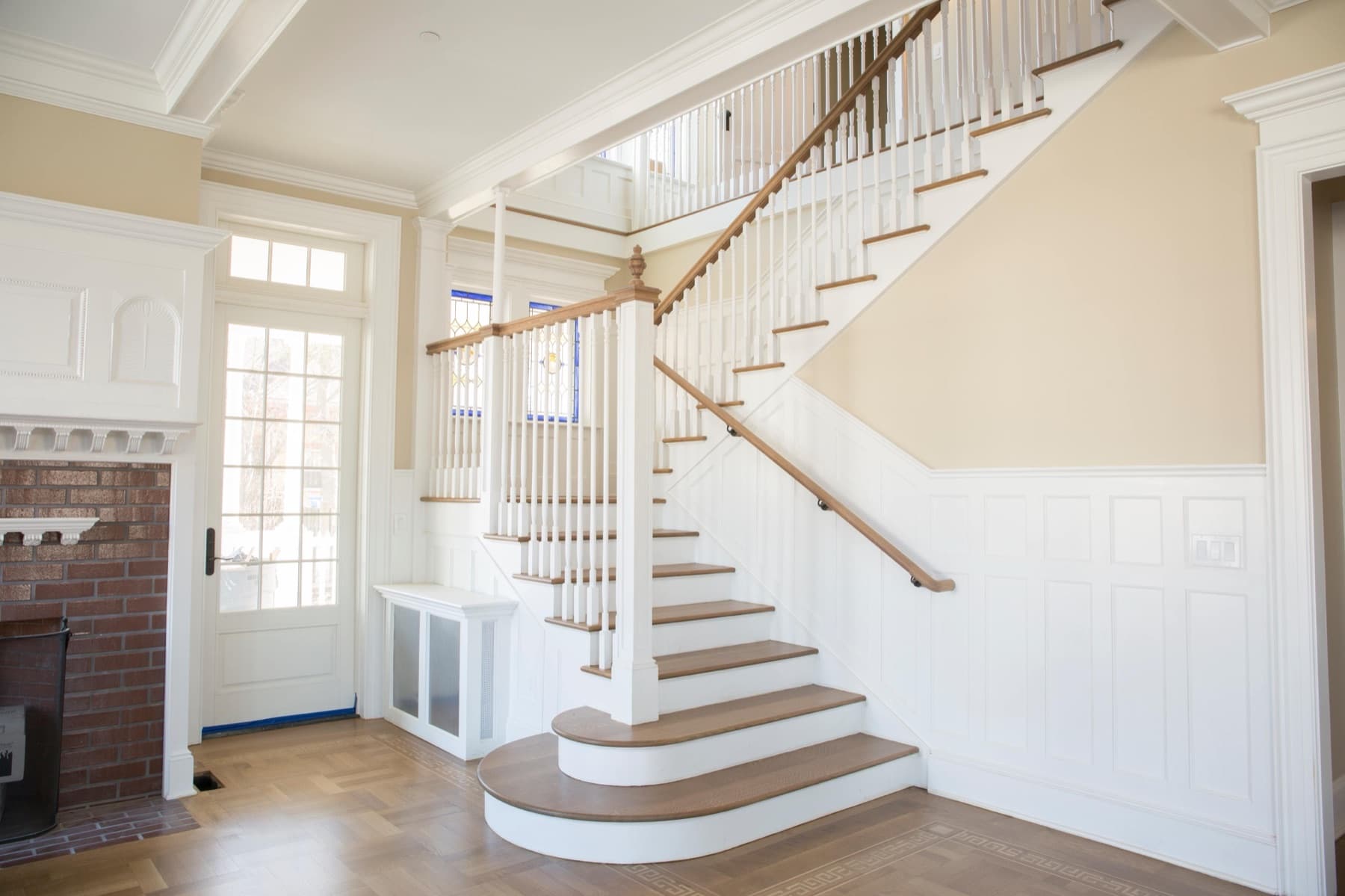 After
After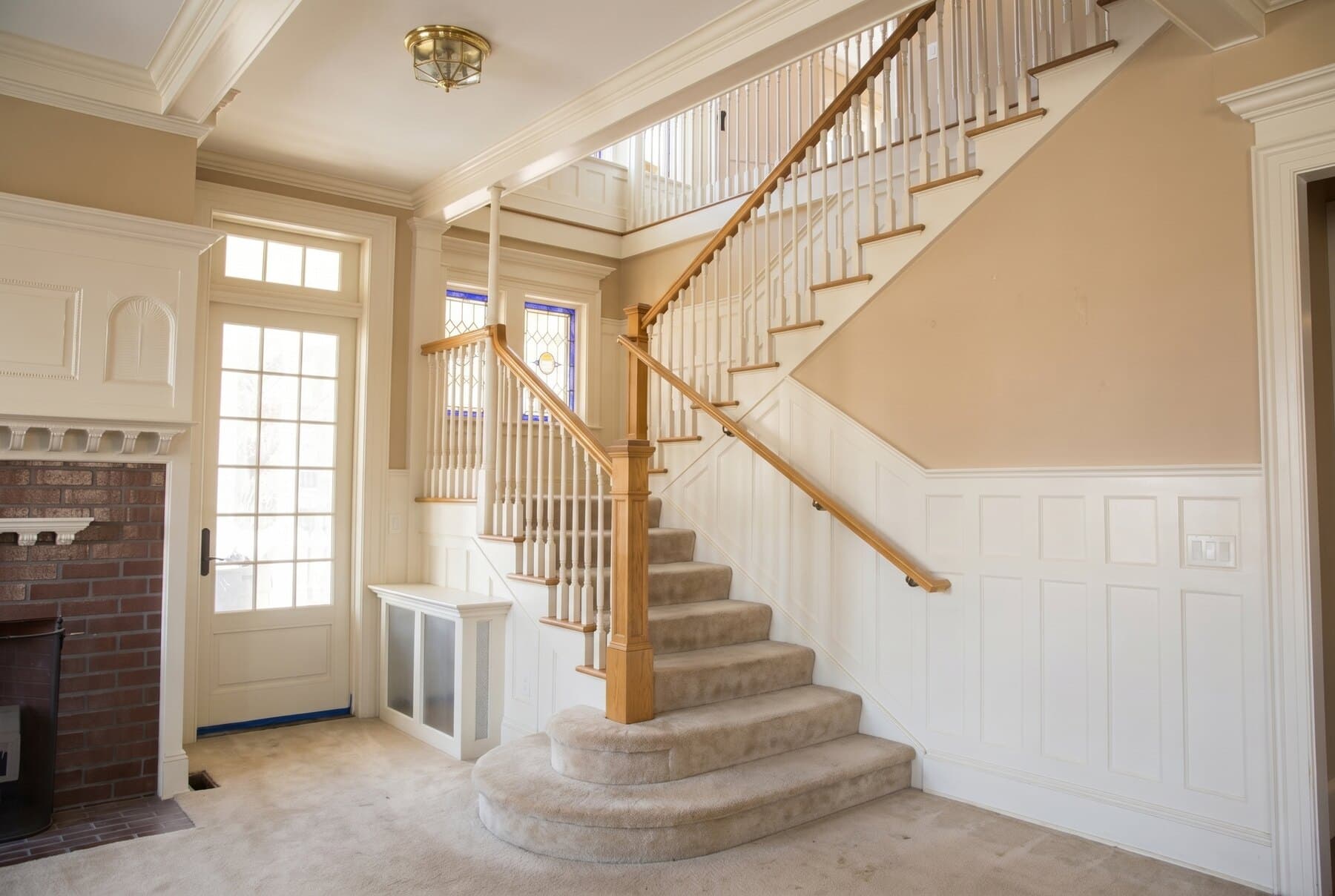
What we match
Newels, balusters, handrails and volutes, finials and fittings — whatever the original carried. Each is sourced or made to match the survivor, then fit and finished in the Whitehall shop.
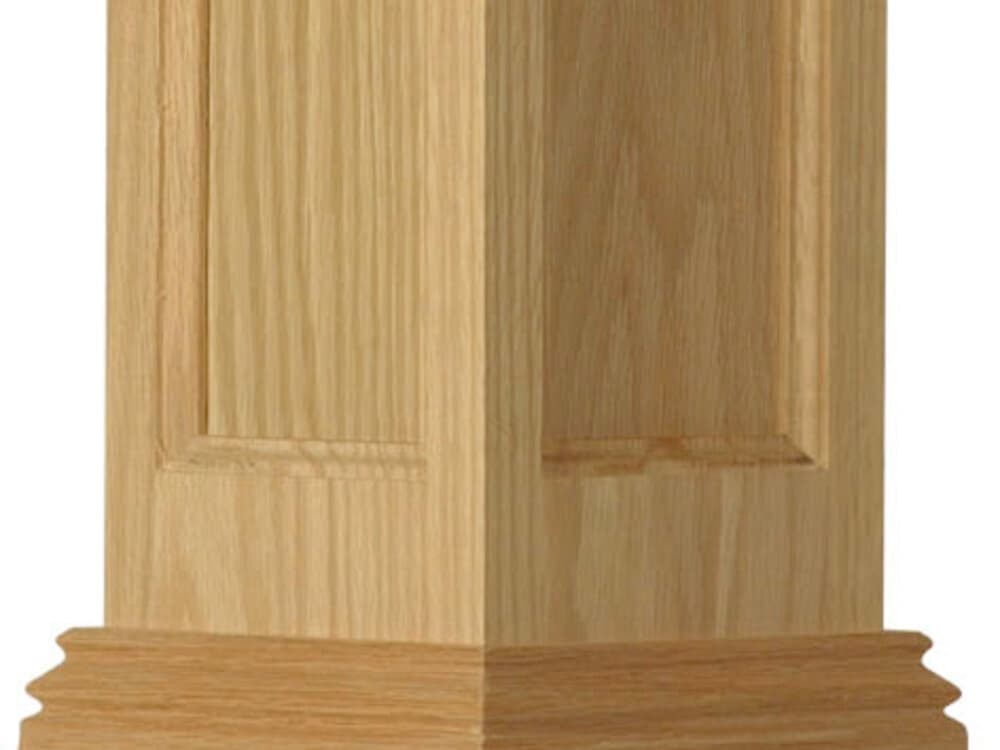
Turned and box newels matched to the original proportion and cap profile.
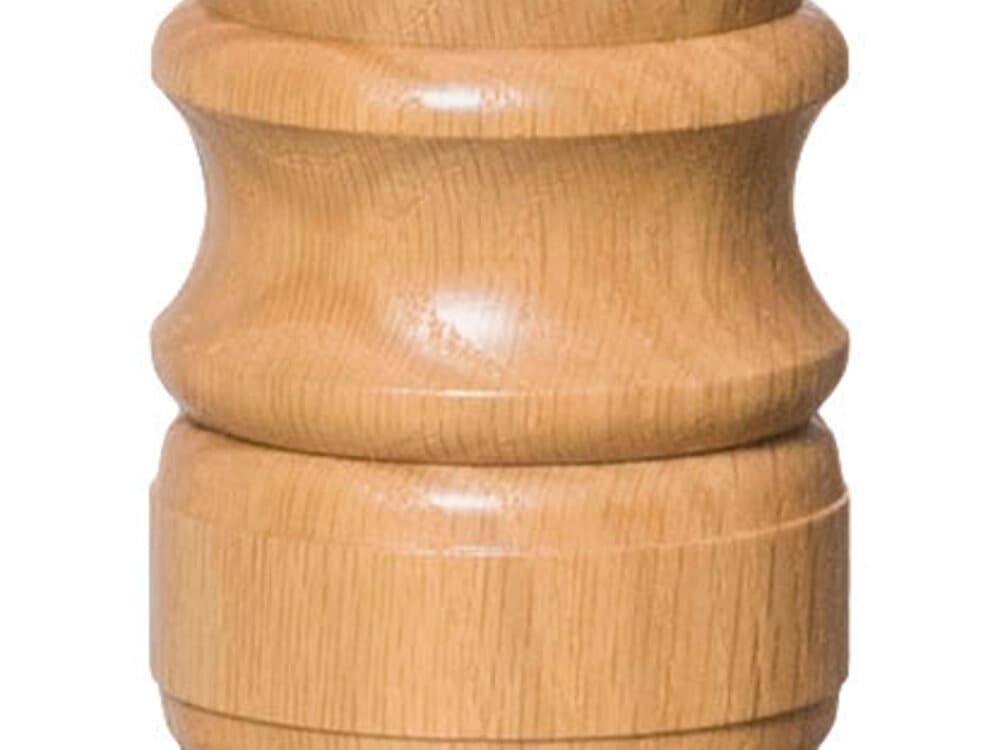
Whole runs matched to the survivors — same bead, same taper.
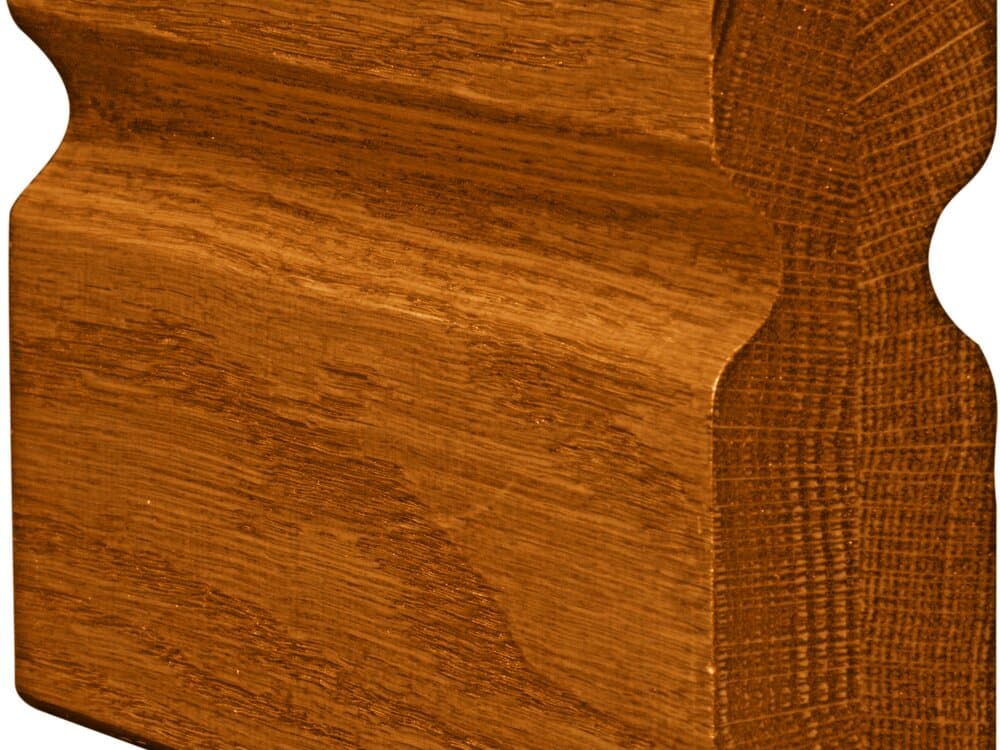
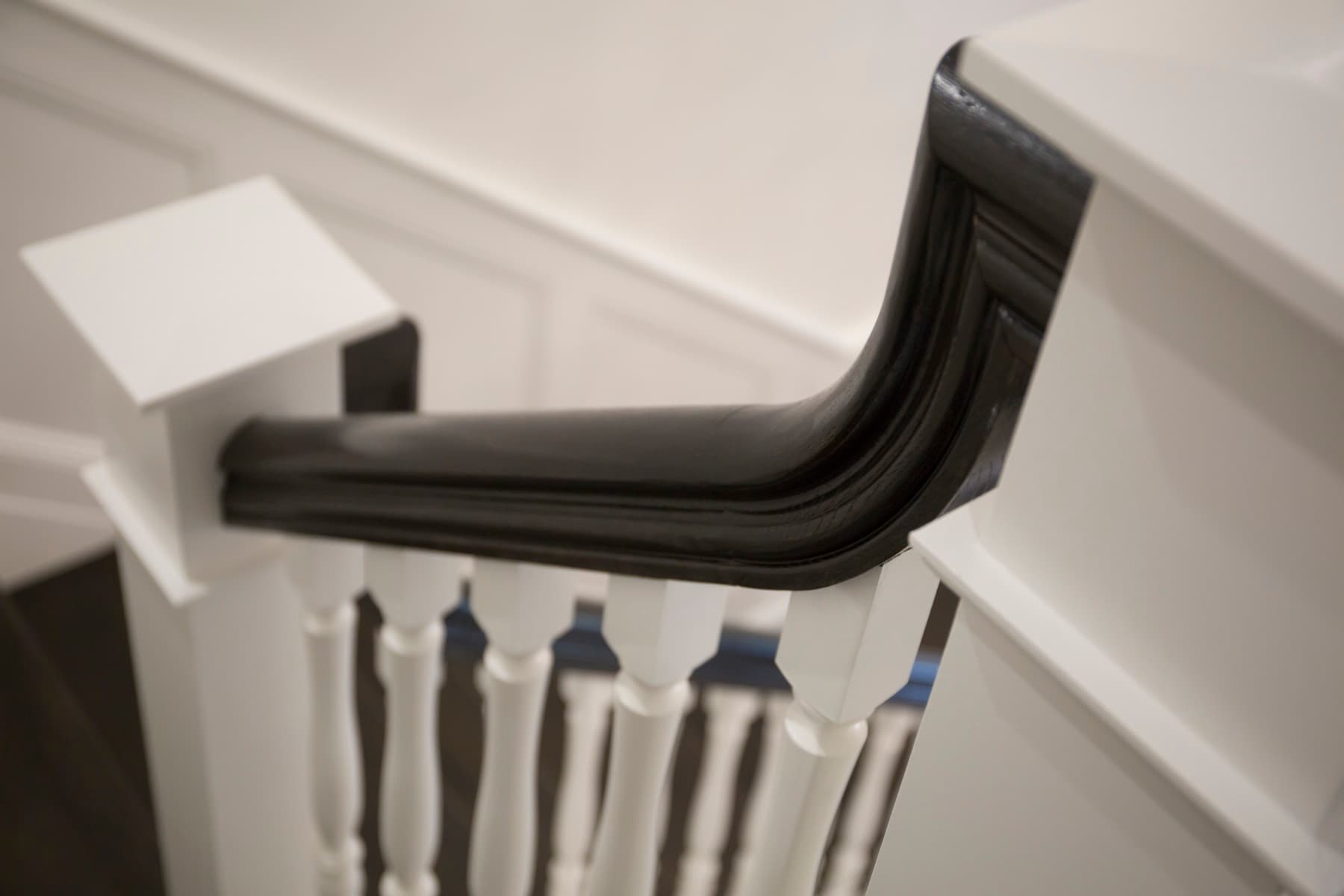
Period rail profiles and curved volutes matched and fit to the original.
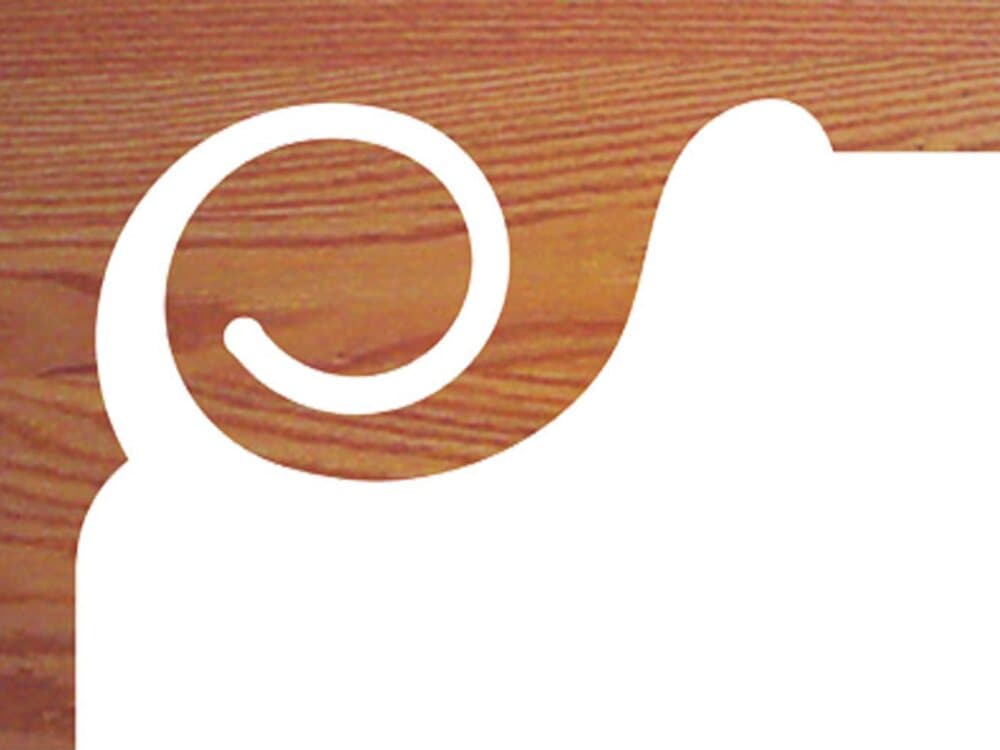
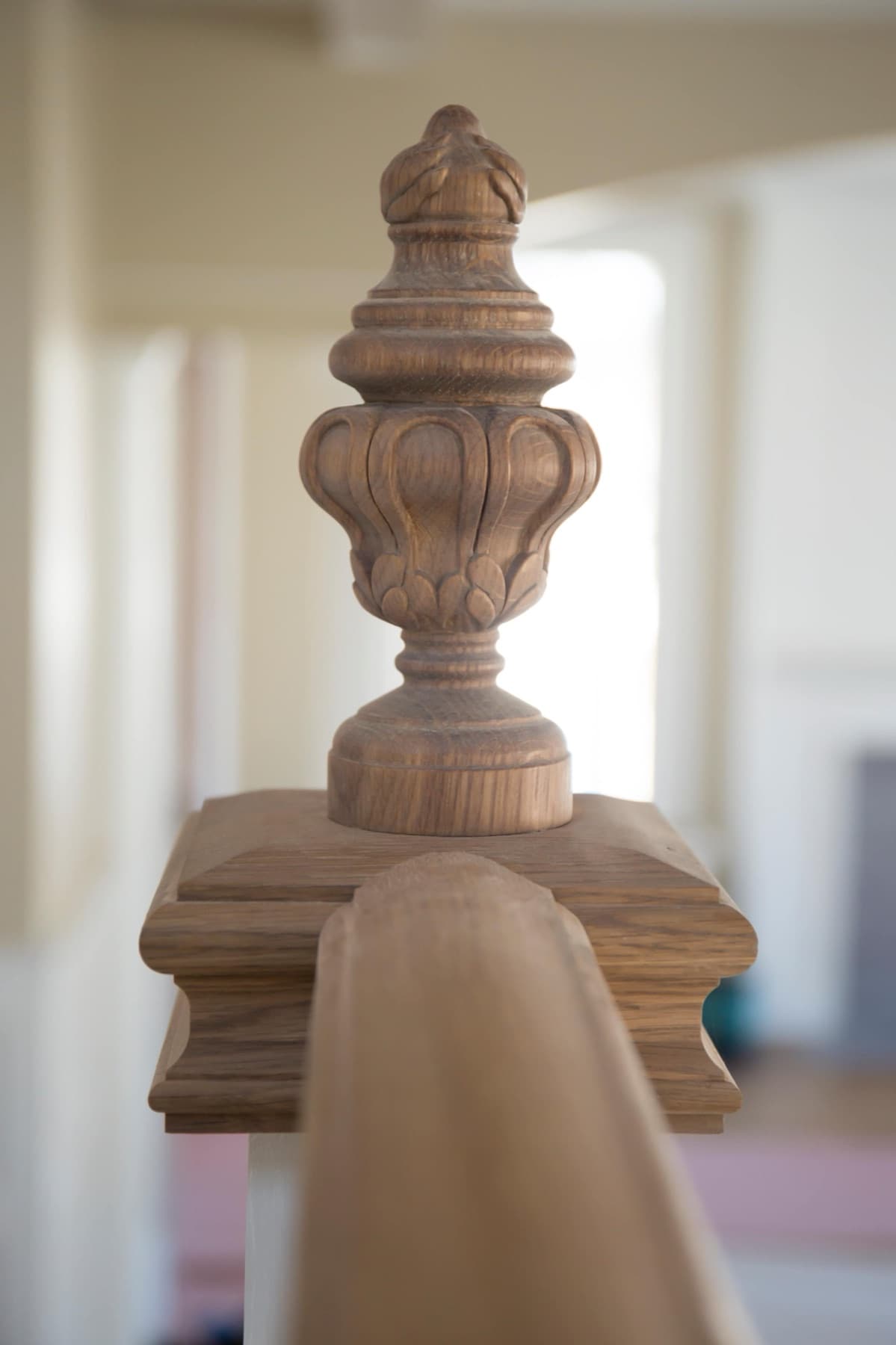
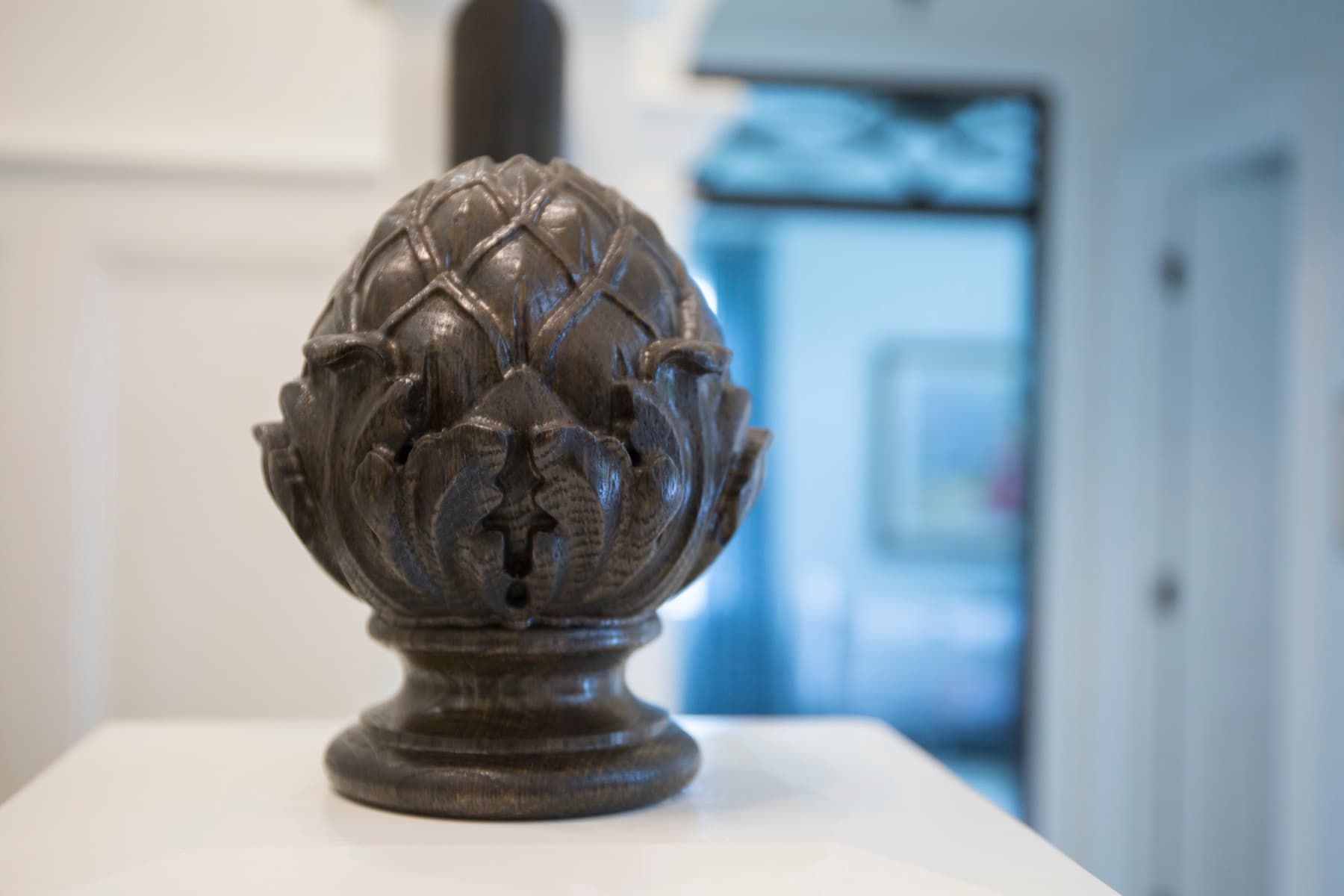
Carved finials and irregular fittings matched from the original and fit in our shop.
What's included
Historic stair restoration takes more than finding the right part. We carefully measure, source or recreate the match, and install everything with attention to detail so it looks like it has always belonged.
We visit your home, take detailed measurements, and document the original part.
We'll help identify the correct profile, wood species, and details to create the closest possible match.
If the part isn't available, we'll work with trusted suppliers to have it recreated to match your original.
Fit, finished, and detailed on our own floor — never on your floors.
Our experienced team installs the new parts with care, making sure everything fits and blends seamlessly.
If something loosens later, give us a call and we'll come back and fix it.
Documented drawing + specs your historic board can sign off on.
Outside our 50-mile core service area, site visits add mileage at IRS rates. Builders and restoration contractors get trade pricing — call us.
Historic stair restoration is a little different from a typical renovation, but we'll guide you through every step. Here's what you can expect when you work with Snyder Stairs.
Recent Projects
Restoration only works if someone can read the original and match it part-for-part — same proportion, same wood, same hand. That's a capability a box store and a general contractor don't carry.
Snyder Stairs
Big-box / online parts
General contractor
Family-owned & veteran-owned in Whitehall, PA since 1987 — two generations of stair specialists. If something loosens later, we come back and fix it.
Every project is a little different, so we don't use one-size-fits-all pricing. The cost depends on the type of part, the wood species, the amount of carving, and whether we can source a match or need to have one custom made. The easiest way to get started is to send us a few photos. We'll review your project, give you a realistic budget range, and let you know whether the original part can be repaired or if it should be replaced.
Most restoration projects take 6–10 weeks, depending on the complexity of the part and how it's sourced. We typically provide an estimate within about a week, and most installations take 1–2 days. If your project requires approval from a historic preservation board, we'll help coordinate that process as well.
Usually, not very. Most of the work happens before we ever arrive at your home. Once your parts are ready, our team completes the installation, protects the surrounding area, and cleans up before we leave. Most installations are finished in 1–2 days.
Usually, yes. The best place to start is by sending us a few clear photos of your staircase. In many cases, that's enough for us to determine the next steps. If we need more information, we'll let you know and schedule a quick site visit.
If the part is still available, we'll source the closest match. If it isn't, we work with trusted suppliers who can recreate it based on the original. Our goal is simple: when the project is finished, the new part should look like it has always belonged there.
That's actually pretty common in older homes. We use the remaining details, measurements, and similar period profiles to recreate the missing pieces. Before anything is made, we'll review the design with you to make sure you're happy with the approach.
Yes. If your project requires historic preservation approval, we can provide the drawings and documentation needed to support the review process and help answer any questions along the way.
Whatever the original was. Most period work in the Lehigh Valley is cherry, walnut, white oak, or mahogany. We can identify the species from a sample (sometimes from the photo). For matched-grain replacements, we source from American suppliers; for fully period-accurate matches (e.g., 1880s old-growth pine), we work with reclaimed-wood specialists. Either way, the species call goes in the project proposal.
Yes. Restoration carries a higher hand-labor share — documenting the original, confirming the match, sourcing or having parts made, and hand-finishing — so it runs above a catalog parts order. We share the breakdown in the proposal. For projects in our 50-mile core service area, site visits are included; outside that radius, we charge mileage at IRS rates. Builders and restoration contractors get trade pricing — call us.
Period stair and railing restoration — we match the part, then fit it. If something loosens later, we come back and fix it.
Period-home owner?
Historic homes deserve historic railings. Send a phone snap of the original and we'll get you a free estimate inside a week — then source it or have it made to match and fit it in our shop.
Restoration
Have a broken newel, missing baluster, or worn handrail? Send us a few photos and we'll review your project, explain your options, and give you a realistic budget range. If we can match it, we'll take care of the rest.
A real person answers — no phone menu · 117 Franklin Street, Whitehall, PA · (610) 443-2240